Brushes, Combs and Picks: Matching Tools to Your Hair
Hair tools come in many shapes, and the right one depends on your hair's texture and length. This guide helps you choose by bristle, tooth spacing and handle.
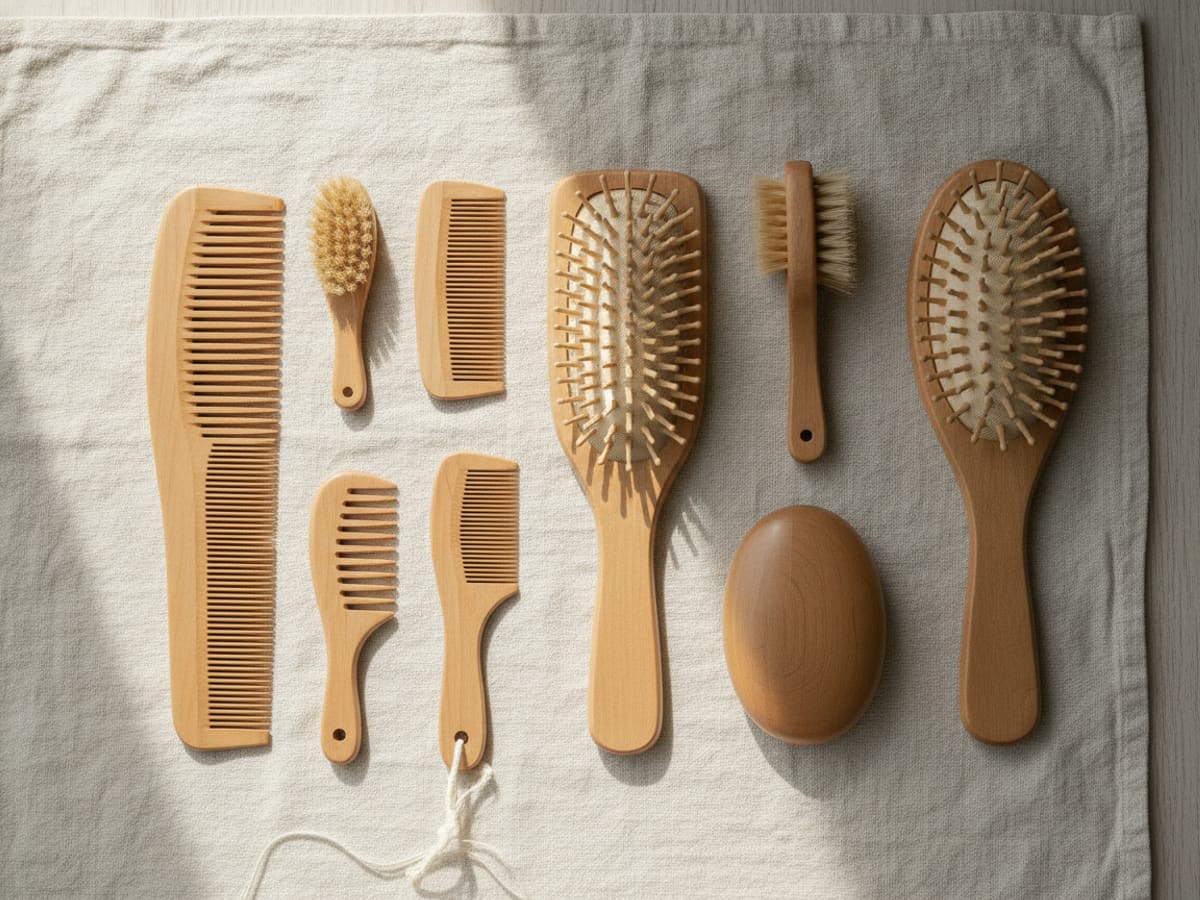
Walk down any hair-tool aisle and the choices can feel endless: paddles, rounds, rakes, picks, combs with teeth of every width. The good news is that a few simple questions narrow things down quickly. Think about your hair, how you style it, and what feels comfortable in your hand.
Start with your hair's texture and length
Texture and length do most of the work in deciding which tool suits you. Texture describes how your strands naturally behave: straight, wavy, curly or coily, and whether they're fine, medium or coarse. Length affects how far a tool has to travel and how many tangles it meets along the way.
Here are some general starting points:
- Fine or straight hair often moves easily through a soft-bristled brush or a comb with evenly spaced teeth. Very stiff tools can feel harsh on a delicate scalp.
- Wavy hair usually does well with a flexible brush for dry hair and a wider comb when it's wet or coated in conditioner.
- Curly and coily hair often works best with wide teeth or a pick, since close-set bristles can pull on curl patterns and disrupt their shape.
- Short hair rarely needs a big brush. A small comb or compact brush is easier to control.
- Long hair tends to tangle at the ends, so a tool that lets you work from the bottom up makes a big difference.
Your habits count too. If you mostly detangle in the shower, you'll want something different than if you're smoothing dry hair before heading out the door.
Wide teeth, fine teeth and everything between
Tooth spacing is the simplest feature to read at a glance, and it tells you a lot about what a comb is for.
- Wide-tooth combs glide through larger sections and are a common choice for detangling, especially on wet or product-coated hair.
- Fine-tooth combs make neat parts and smooth short, fine hair. They can snag on thick or tangled hair, so they're better for finishing than for detangling.
- Rake combs have widely spaced, sturdy teeth. People with curly hair often use them to distribute conditioner or lift roots.
- Hair picks have long, separate prongs. They add volume and shape without flattening curls.
- Tail combs have a narrow pointed handle for sectioning, which is useful for braiding, coloring at home or styling.
If you can only own one comb, a medium-to-wide tooth comb covers the most ground. Check the teeth by running a fingertip along them. Smooth, rounded edges and seams that don't catch are signs of a well-made tool, because rough spots can snag hair no matter how wide the spacing is.
Bristle types and what they're for
Brushes are more varied than combs because bristle material, spacing and the base all change how they feel.
- Natural boar bristles are fairly soft and close together. Many people like them for smoothing fine to medium hair and spreading scalp oils toward the ends.
- Nylon bristles are firmer and more widely spaced, so they can work through thicker or longer hair more easily.
- Mixed bristles combine both materials and try to do a bit of each job.
- Flexible pins on a cushioned base give slightly as you brush, which many people find comfortable for detangling.
- Vented brushes have openings in the back that let air pass through, which is handy when you're blow-drying.
- Round brushes help shape hair as you dry it. Smaller barrels suit shorter hair and tighter curls, while larger ones suit longer hair.
Whatever you choose, look for bristle tips that are rounded or capped. Bare, sharp tips can feel scratchy against the scalp.
Comfort and grip when you use it every day
A tool that's technically right but awkward to hold usually ends up in a drawer. Since you'll use it often, how it feels in your hand matters.
Pick up the tool if you can, and notice its weight and balance. A heavy brush can tire your wrist during a long styling session, while a very light one may feel flimsy. Handles with a gentle curve or a slightly textured surface are easier to hold when your hands are wet or slippery with product.
Pay attention to how it feels against your scalp, too. You should be able to brush or comb without wincing. If you have to press hard to get through your hair, the tool may be wrong for your texture, or the hair may need to be detangled gently by hand first.
Keeping tools clean
Hair, dust, oils and styling products collect on brushes and combs over time. Cleaning them regularly keeps that buildup from going right back onto your hair. A rough rule is to clear out loose hair often and do a deeper wash every so often, more frequently if you use a lot of product.
- Remove