Reading a Moisturizer Label Without a Chemistry Degree
A walkthrough of the label terms that show up on moisturizers and what they do and don't tell you. Use it to compare options on your own terms.
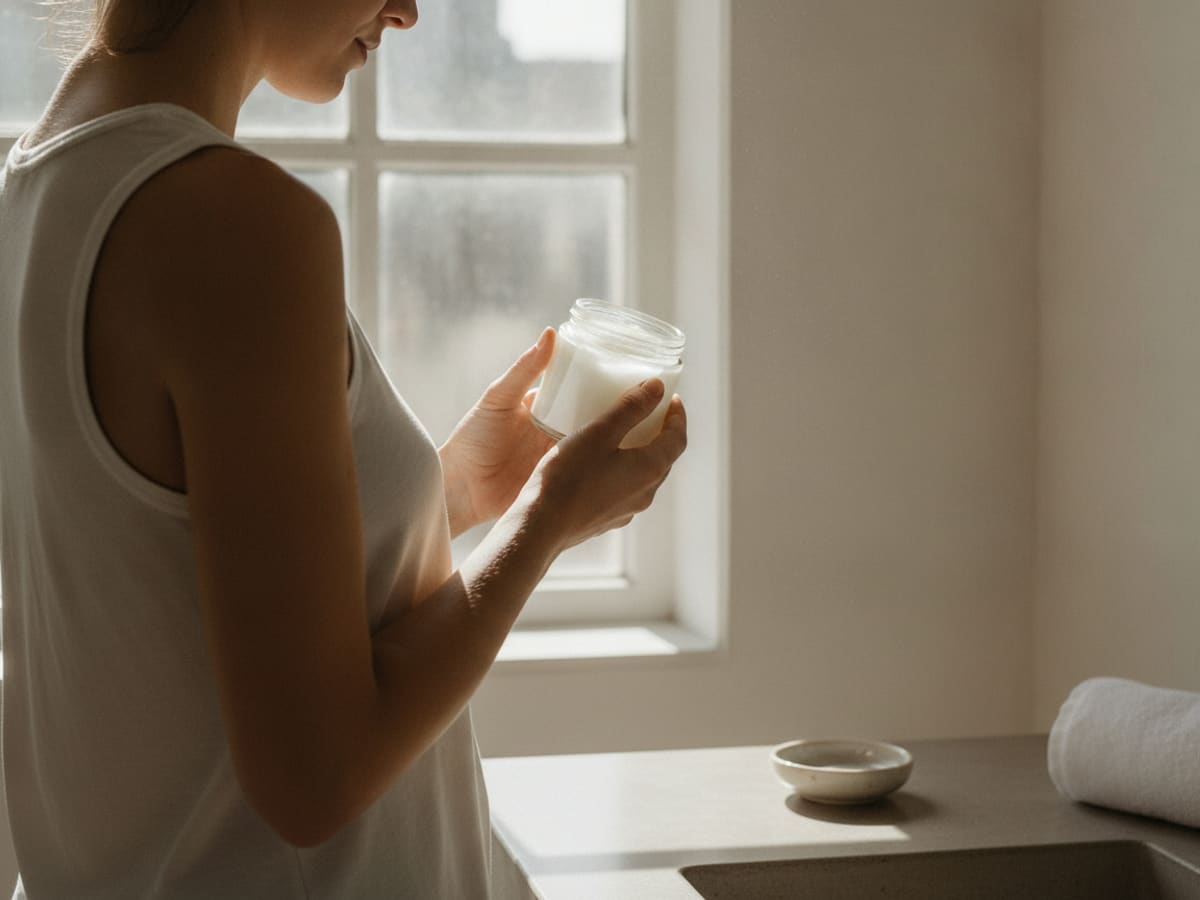
Start with what you want from a moisturizer
Before you read a single ingredient, decide what job you want the product to do. Most people are looking for one or two things: comfort, a smoother feel, or a barrier that helps skin hold onto water. Naming your goal makes the label much easier to scan, because you're looking for a few clues instead of trying to judge everything.
It helps to think about your skin as it behaves day to day. Does it feel tight after washing? Does it get shiny by midday? Does it react to scents? Your answers are more useful than a skin type label from a chart.
A few questions worth asking yourself:
- Do I want something light for daytime or richer for night?
- Will I wear it under sunscreen or makeup?
- Is this for my face, my body, or both?
- Have I had a reaction to a product before, and do I remember what was in it?
Ingredient order and what it suggests
In the United States, ingredients on a cosmetic label are generally listed from the highest amount to the lowest. The exception is ingredients present at one percent or less, which can appear in any order after the larger ones. So the first handful of ingredients usually make up most of the product.
Water is often first. That's normal, since many moisturizers are a blend of water and oils. After that, you'll typically see ingredients that fall into a few broad groups:
- Humectants, which attract water. Glycerin is a common example.
- Emollients, which soften and smooth the skin's surface. Plant oils and fatty alcohols often play this role.
- Occlusives, which form a light seal to slow water loss. Petrolatum and certain waxes are familiar examples.
Seeing a mix of these groups in the first several ingredients tells you the formula is built to do more than one thing. It doesn't tell you how well it will work for you, and a long list isn't automatically better than a short one.
Further down, you'll find preservatives, thickeners, and fragrance. Preservatives are there to keep the product from growing bacteria and mold, so their presence is expected rather than a red flag.
Label terms that sound official but vary
Some phrases on the front of a package sound regulated but don't have one fixed meaning. It's worth treating them as hints, not guarantees.
- Hypoallergenic. Brands can use this word without meeting a single standard, so it doesn't promise that you won't react.
- Natural. There's no universal definition, and a natural ingredient can still irritate skin.
- Dermatologist-tested or recommended. This may describe a limited test or opinion, and it doesn't tell you how broad or rigorous it was.
- Non-comedogenic. It suggests the formula was designed not to clog pores, but how it's decided differs from one maker to the next.
- Fragrance-free versus unscented. These aren't always the same. Unscented products can contain ingredients that mask odor, so check the ingredient list if you're avoiding fragrance.
- Clean. This is a marketing word with no standard definition.
The ingredient list is more dependable than the front label, because it's the part that follows labeling rules. If a claim matters to you, check whether the ingredient list supports it.
Texture, feel and the time you'll really use it
A well-formulated moisturizer you dislike is one you won't use. Texture matters more than people tend to admit.
Lotions are lighter and spread easily, which suits warm weather or oilier skin. Creams are thicker and feel more cushioning. Ointments are the richest and can feel heavy, but some people prefer them on very dry areas such as hands or elbows. Gels are watery and quick to absorb.
Think about when you'll use it. A product you apply in a rush before work may need to sink in quickly. One you use at night can be richer, since you aren't layering anything over it.
You can also try it before committing. If you're able to, test a small amount on your inner forearm or along the jaw for a few days. This is a simple way to see how your skin responds before putting it on your whole face.
Here's a simple routine for evaluating a new moisturizer:
- Read the first several ingredients and note the mix of humectants, emollients, and occlusives.
- Check the end of the list for fragrance or anything you know bothers you.
- Apply a small amount to a limited area for a few days.
- Notice how it feels after an hour and again by evening.
- Decide whether it fits the time of day you'll actually use it.
When irritation means it's time to ask a professional
Mild adjustment is common with any new product, but ongoing or worsening discomfort isn't something to push through. Stop using the product if your skin becomes red, itchy, stinging, or swollen after you apply it. Returning to your previous simple routine gives your skin a chance to settle.
It can help to save the packaging or take a photo of the ingredient list. If you do see a professional, that list gives them something concrete to work with, and it makes it easier to spot patterns the next time you shop.